

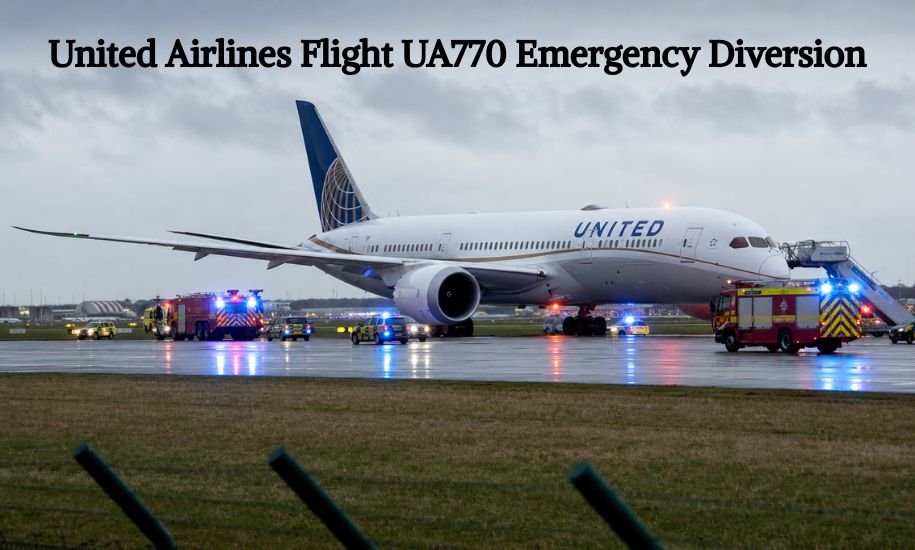
Air travel is widely considered one of the safest ways to travel, but unexpected situations can still occur during flights. One aviation incident that recently attracted public attention was the United Airlines Flight UA770 emergency diversion. Travelers, aviation enthusiasts, and news readers began searching for details after reports surfaced that the aircraft had changed course and landed unexpectedly during an international journey.
The incident quickly became a trending aviation topic because emergency diversions are rare and often raise concerns among passengers. Fortunately, reports indicate that the flight crew handled the situation professionally, ensuring the aircraft landed safely without injuries.
The United Airlines Flight UA770 emergency diversion refers to a situation in which a United Airlines aircraft operating an international route was forced to divert from its scheduled destination due to an onboard issue. According to aviation-related reports, the flight was traveling from Barcelona to Chicago before the crew declared an emergency and redirected the aircraft to London Heathrow Airport as a precautionary safety measure.
Quick Bio Table
| Detail | Information |
|---|---|
| Flight Number | UA770 |
| Airline | United Airlines |
| Aircraft Type | Boeing 787-9 Dreamliner |
| Original Route | Barcelona to Chicago |
| Diversion Airport | London Heathrow Airport |
| Incident Type | Emergency Diversion |
| Reported Cause | Possible technical or cabin issue |
| Passenger Injuries | None Reported |
| Crew Response | Safe emergency handling |
| Flight Status | Landed safely |
Understanding the United Airlines Flight UA770 Emergency Diversion
The United Airlines Flight UA770 emergency diversion became widely discussed online because it involved a large international passenger aircraft making an unscheduled landing. While emergency diversions may sound alarming, they are part of standard aviation safety procedures designed to protect passengers and crew whenever a potential issue arises during flight.
In this case, reports suggested that the pilots identified a situation that required immediate attention. Rather than continuing the long transatlantic journey to Chicago, the crew chose to divert to Heathrow Airport in London, one of the busiest and best-equipped international airports in the world.
Aviation experts often explain that pilots are trained to prioritize safety over schedules, fuel efficiency, or operational convenience. If any warning system indicates a possible problem, flight crews are encouraged to land as soon as safely possible.
What Caused the Emergency Diversion?
Although official details remain limited, several aviation blogs and online discussions suggested the issue may have involved a technical warning or cabin-related concern. Some reports mentioned possible pressurization irregularities, while others speculated about unusual system alerts inside the aircraft.
Modern aircraft like the Boeing 787 Dreamliner are equipped with sophisticated onboard computers that constantly monitor engines, fuel systems, cabin pressure, electrical components, and hydraulic systems. Even a minor warning can lead to precautionary actions by the pilots.
Commercial airlines follow extremely strict safety procedures. If pilots believe there is even a small possibility of a larger issue developing, they may decide to divert the aircraft immediately. This approach minimizes risks and ensures passenger safety remains the top priority.
Importantly, the aircraft reportedly landed safely, which indicates the crew maintained full control throughout the situation.
The Role of the Boeing 787 Dreamliner
The aircraft involved in the United Airlines Flight UA770 emergency diversion was reportedly a Boeing 787-9 Dreamliner. This aircraft is known for its advanced technology, fuel efficiency, and long-haul capabilities.
The Dreamliner includes several advanced safety features such as:
- Real-time aircraft monitoring systems
- Advanced cockpit warning systems
- Backup hydraulic and electrical systems
- Improved cabin pressure technology
- Enhanced navigation and communication systems
These features are specifically designed to help pilots identify and manage potential problems before they become dangerous.
Despite occasional technical incidents, the Boeing 787 remains one of the most widely used and trusted long-distance commercial aircraft in the aviation industry.
Passenger Experience During the Incident
Passengers onboard reportedly experienced an unexpected change in the flight plan after the crew informed them about the diversion. Situations like this can naturally create anxiety among travelers, especially during international flights over the ocean.
However, cabin crews are specially trained for emergency scenarios and are responsible for keeping passengers calm and informed. Reports suggest that flight attendants maintained professionalism throughout the event and continued following standard safety procedures.
Passengers may have noticed:
- Announcements from the cockpit
- A change in flight direction
- Emergency vehicles visible after landing
- Increased activity among crew members
Even though the word “emergency” can sound frightening, many diversions are precautionary and do not involve immediate danger. Aviation professionals are trained to respond early rather than wait for a problem to worsen.
Why Emergency Diversions Happen
Emergency diversions occur more often than many people realize. Airlines across the world occasionally reroute flights for safety reasons. Common causes include:
Technical Problems
Aircraft systems are highly advanced and sensitive. Warning alerts involving engines, hydraulics, navigation systems, or cabin pressure can trigger a diversion.
Medical Emergencies
A passenger or crew member experiencing a severe medical issue may require immediate landing at the nearest airport.
Weather Conditions
Heavy storms, strong winds, poor visibility, or dangerous turbulence can force pilots to land elsewhere.
Security Concerns
Unusual passenger behavior or security threats may require emergency action.
Fuel or Operational Issues
Unexpected fuel calculations or airport restrictions may occasionally require alternate landings.
The United Airlines Flight UA770 emergency diversion appears to have been connected primarily to precautionary safety measures rather than a catastrophic emergency.
How Pilots Handle Emergency Diversions
Commercial airline pilots undergo years of training before flying passenger aircraft. They regularly practice emergency situations in advanced flight simulators designed to recreate real-world scenarios.
When an issue occurs during a flight, pilots follow several steps:
- Identify the warning or problem
- Communicate with air traffic control
- Assess nearby airports
- Prepare the aircraft for landing
- Coordinate with emergency response teams
In the case of UA770, the pilots reportedly declared an emergency before landing safely at Heathrow Airport. Emergency declarations allow air traffic control to prioritize the aircraft and provide immediate landing clearance.
This quick coordination between pilots, controllers, and ground crews is one reason commercial aviation maintains such a strong safety record worldwide.
Public Reaction to the Incident
After reports about the United Airlines Flight UA770 emergency diversion appeared online, many people discussed the incident on aviation forums and social media platforms. Flight-tracking websites also showed the aircraft’s sudden route change, increasing public attention.
Most public reactions focused on relief that the plane landed safely and appreciation for the professionalism of the pilots and cabin crew. Aviation enthusiasts also highlighted how modern safety systems successfully prevented the situation from becoming more serious.
Events like this often remind travelers that emergency procedures exist specifically to keep passengers safe in unusual circumstances.
Aviation Safety Standards Continue to Improve
The aviation industry continues to improve safety standards every year through advanced technology, stricter maintenance requirements, and enhanced pilot training programs.
Airlines invest heavily in:
- Aircraft inspections
- Crew emergency training
- Predictive maintenance systems
- Real-time monitoring technology
- Passenger safety protocols
Because of these efforts, serious aviation accidents remain extremely rare compared to the enormous number of flights operating globally each day.
The United Airlines Flight UA770 emergency diversion serves as an example of how aviation systems are designed to respond quickly and effectively whenever potential issues arise.
Final Thoughts
The United Airlines Flight UA770 emergency diversion gained attention because it involved a precautionary emergency landing during an international journey. While the exact technical issue may not have been fully disclosed publicly, the most important outcome was that the aircraft landed safely and passengers were protected.
The incident also demonstrates the strength of modern aviation safety procedures. From advanced aircraft technology to highly trained pilots and cabin crews, every part of the aviation system is built around passenger protection.
As more people searched for “What is United Airlines Flight UA770 Emergency Diversion?” the event became another reminder that emergency landings are often precautionary decisions made to ensure the highest possible level of safety. At Empire Magazines, we continue covering important aviation stories and travel developments that matter to readers around the world.
